Affinity-tuned and functionally engineered CAR T cells
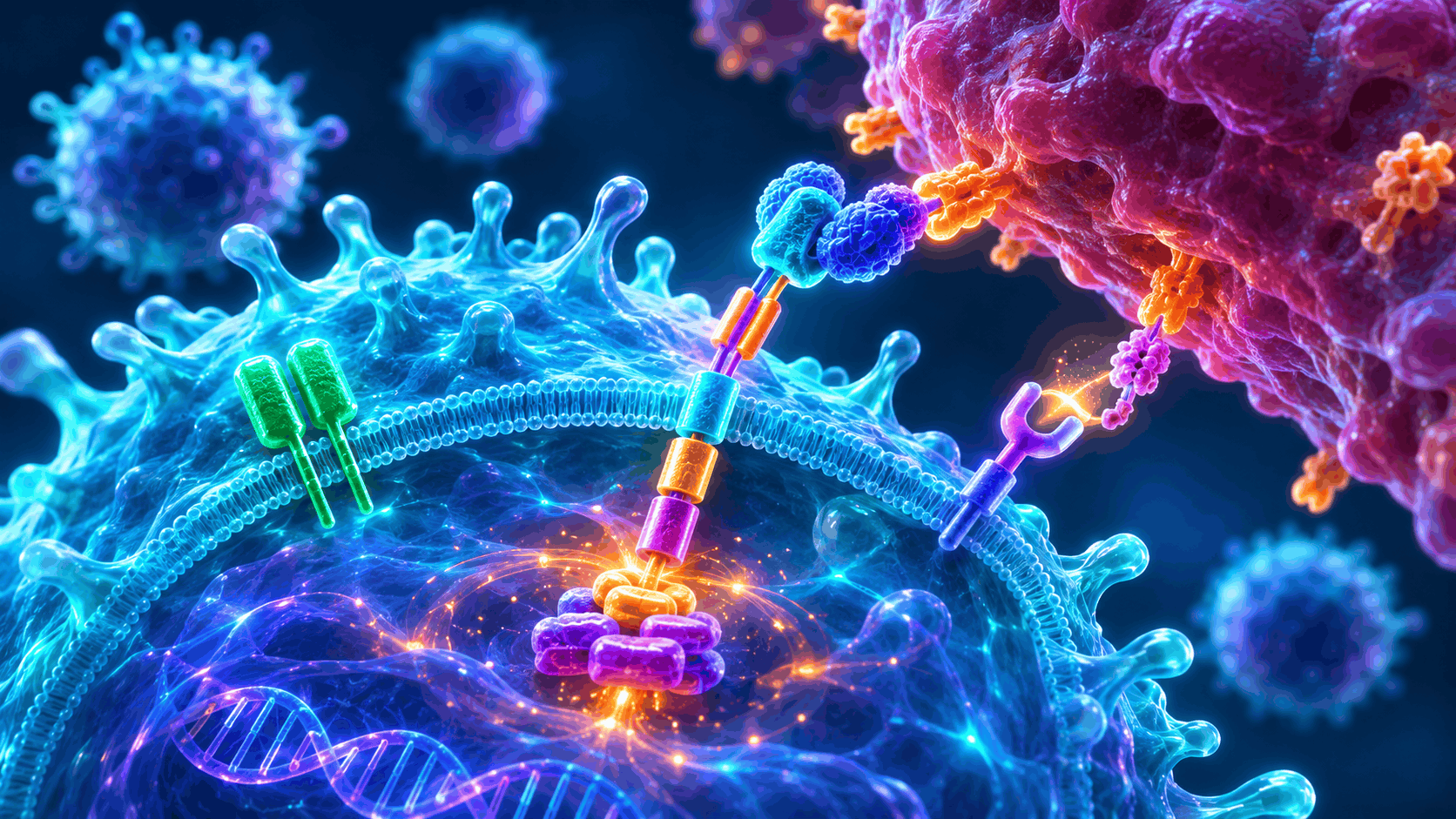
Our lead platform is a mesothelin-targeted CAR T cell built around four design elements, each addressing a specific failure mode in solid tumors:
- An affinity-tuned single-domain antibody (VHH, or nanobody) against mesothelin, a compact alternative to a conventional scFv binding domain
- An exhaustion-resistant CD3ζ signaling architecture designed to support functional persistence
- A truncated PD-1 decoy that delivers checkpoint blockade locally within the tumor rather than systemically
- An integrated RQR8 safety switch, enabling antibody-mediated depletion of the engineered cells when needed
Together these target two principal barriers to CAR T cell therapy in solid tumors: checkpoint-mediated immunosuppression and T cell exhaustion. Supporting work on IL-10 and TGF-β signaling in the tumor microenvironment informs the next generation of constructs.
These design principles extend beyond mesothelin. The construct architecture, binder format, and safety switch can be adapted to other CAR targets and other immune cell products. The lead program is preclinical; clinical safety and efficacy have not been established.
Non-viral cell engineering and gene delivery
- Conventional CAR T cells are made with lentiviral or retroviral vectors, which are costly, slow to manufacture, and carry integration-site concerns. Standard plasmid DNA alternatives still contain bacterial backbone sequences and antibiotic resistance genes.
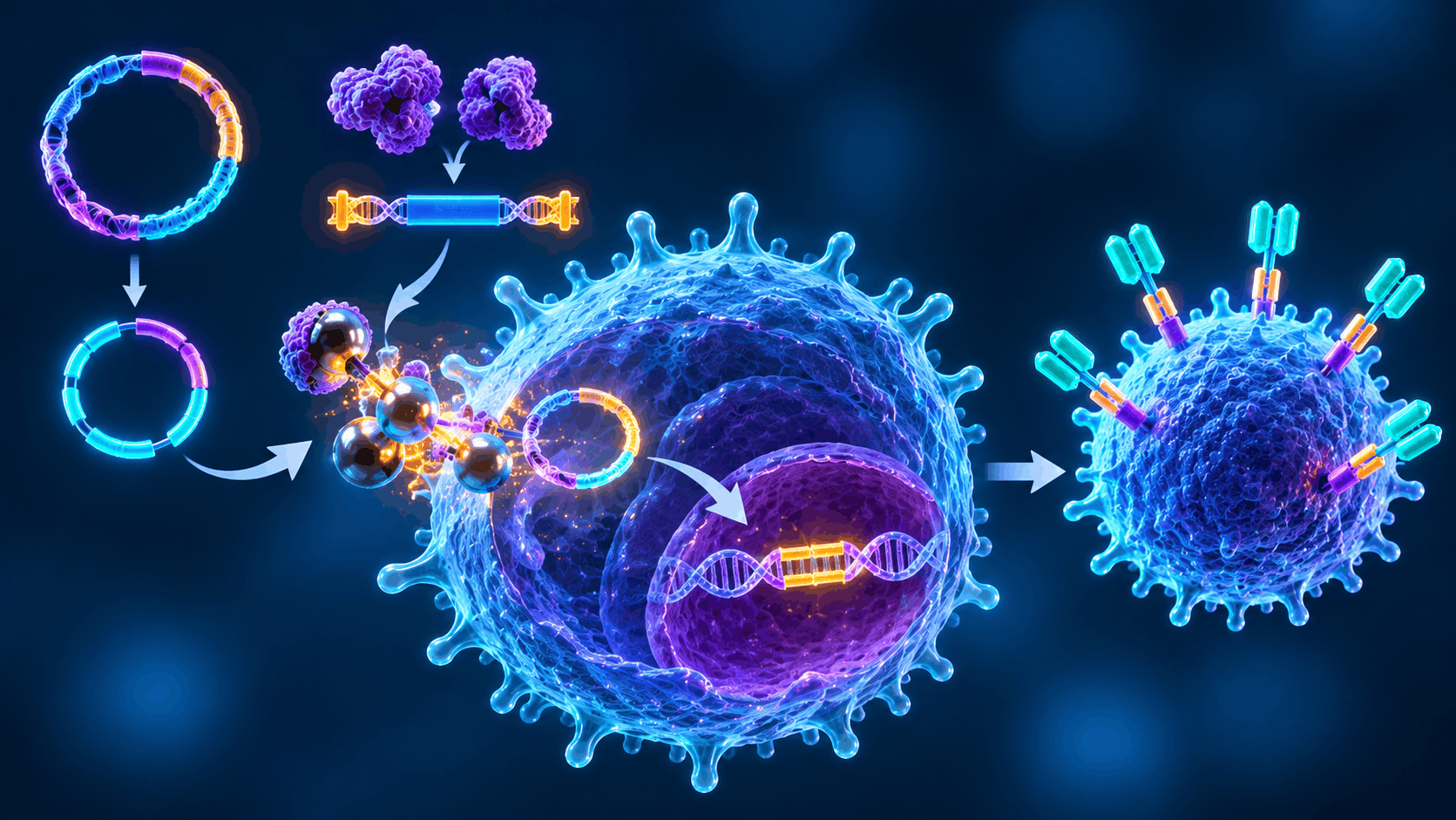
- We use minicircle DNA together with Sleeping Beauty transposition. The minicircle carries the therapeutic cassette with the bacterial backbone and antibiotic resistance markers removed; Sleeping Beauty provides stable genomic integration. The result is a CAR T cell made without virus and without antibiotic selection markers, on a simpler and less expensive manufacturing path. The vector system is the delivery route for our own programs and is applicable to other cell engineering projects.
- We are also exploring direct in vivo immune cell engineering, using CD3-targeted ionizable lipid nanoparticles to deliver CAR programming to circulating T cells. This would remove the need for apheresis and ex vivo manufacturing altogether, with particular relevance to older patients, for whom T cell fitness and manufacturing feasibility are principal barriers. The program is at the design and early feasibility stage.
Perfused human tumor-on-chip technology
Stroma and irregular perfusion decide how much of a therapy ever reaches tumor cells, and conventional models do not capture this. Animal models carry non-human stroma at high cost and limited throughput. Orthotopic cell line implants recruit host stroma that differs from human tumor stroma in composition and complexity. Static human cultures lack flow, matrix transit, and a vascular interface. Plasma pharmacokinetics and bulk tumor concentration average across the whole tissue, resolving neither penetration depth, nor rim-versus-core gradients, nor exposure at individual tumor cells.
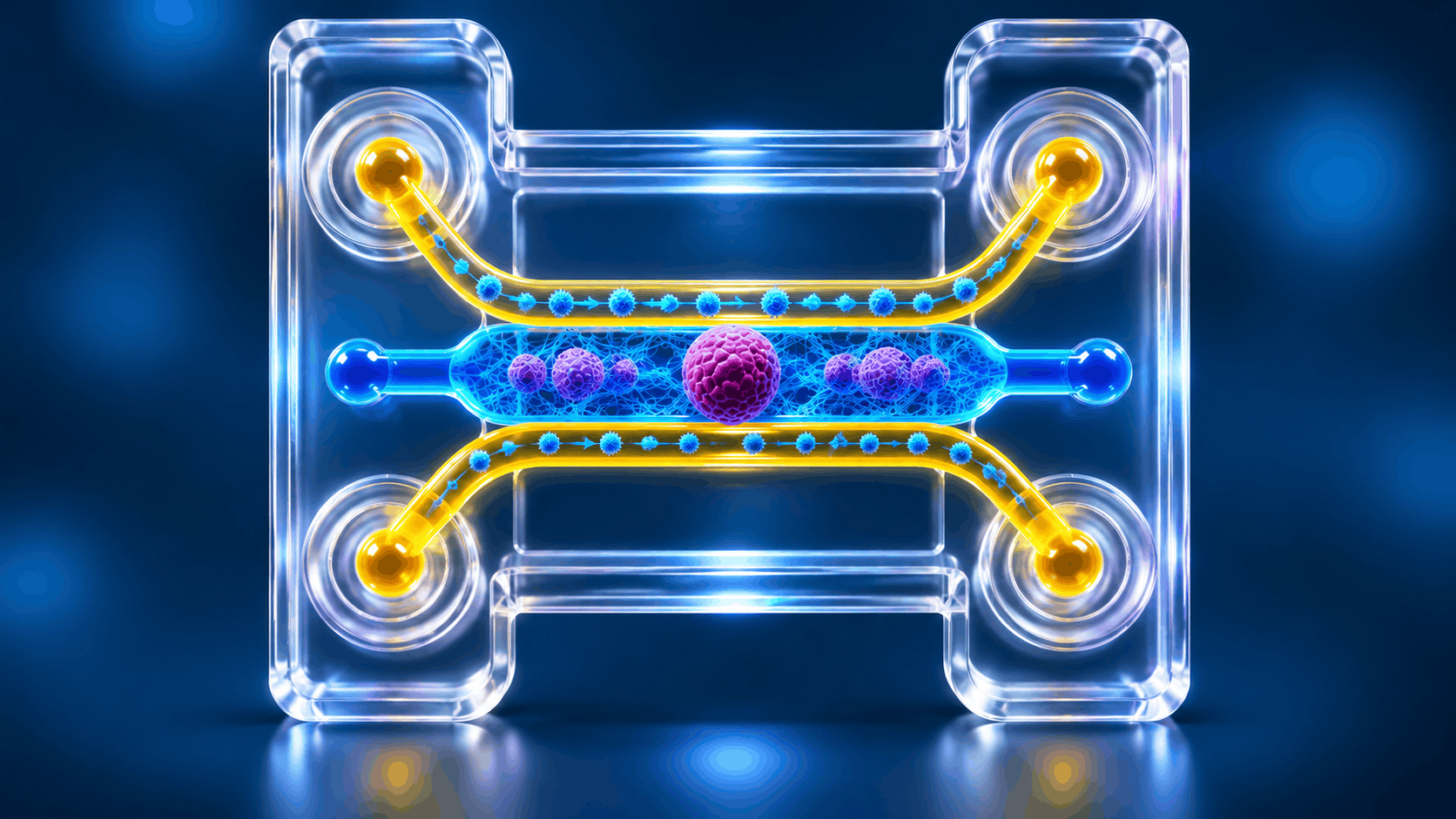
Our platform addresses that gap. Human tumor spheroids are embedded in collagen in the central channel of a tri-channel microfluidic device, and the therapeutic agent is introduced through a flanking perfused channel. Gravity-driven rocker flow replaces syringe-pump perfusion, avoiding the cell settling that limits pump-driven devices for cell therapy work.
The platform combines four complementary measurements. Time-resolved imaging resolves the first three within a single device and a single field of view; sequencing and immunoblotting supply the fourth:
- Transit of the agent across the stromal matrix
- Depth of penetration into the tumor mass, distinguishing rim from core
- Tumor cell death over time, at single-cell resolution in intact three-dimensional tissue
- Molecular response, through RNA sequencing and NF-κB pathway analysis
The chip has been used to assess mesothelin CAR T cell responses in pancreatic and ovarian models. Complementary three-dimensional spheroid studies extend to thoracic and triple-negative breast cancer, with mesothelin-low comparators confirming target dependence.
Development is extending the system from cell line spheroids to patient-derived tumor explants and precision-cut tissue slices that retain native stroma, perfused through a human microvascular interface.
Multi-modality therapeutic evaluation
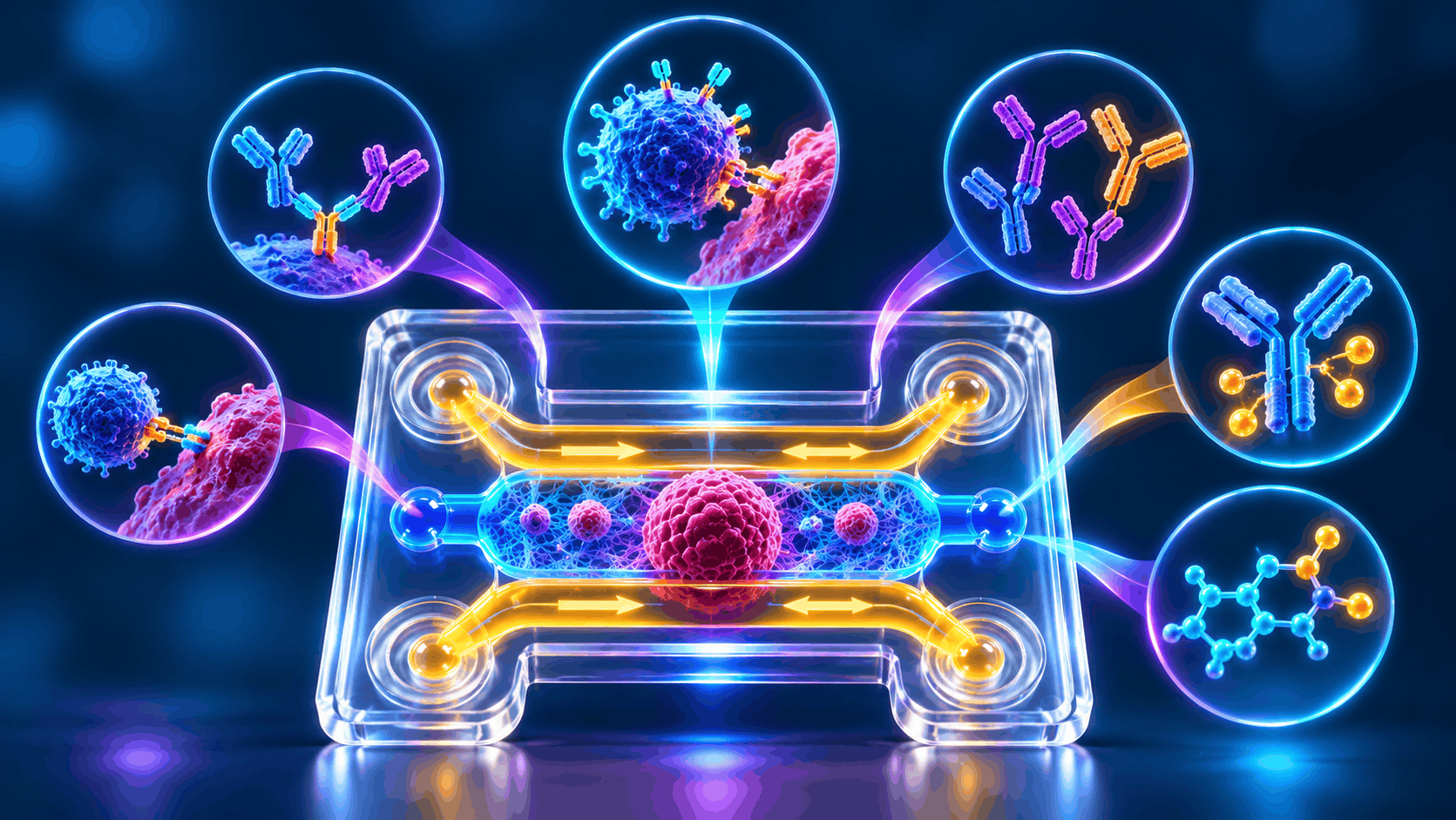
- Because the chip measures where an agent goes and what happens when it arrives, rather than any property of a particular therapeutic class, its readouts are not limited to cell therapy. Mesothelin CAR T cells were the test agent during development: they are the worked example, not the limit of the system.
- Planned applications include partner-selected T cell engagers, bispecific and multispecific antibodies, antibody-drug conjugates, and small molecules. Assays for each modality are developed and qualified for their distinct delivery and pharmacodynamic requirements.
- These human-relevant approaches align with the shift toward human-based preclinical models under the FDA Modernization Act 2.0. They may complement conventional animal studies and, for defined questions, support reduced animal use.